Uma Bennett · 14 November 2026
Regulatory Overhauls Prompt Reevaluations of Sustainable Assets in Peripheral Markets
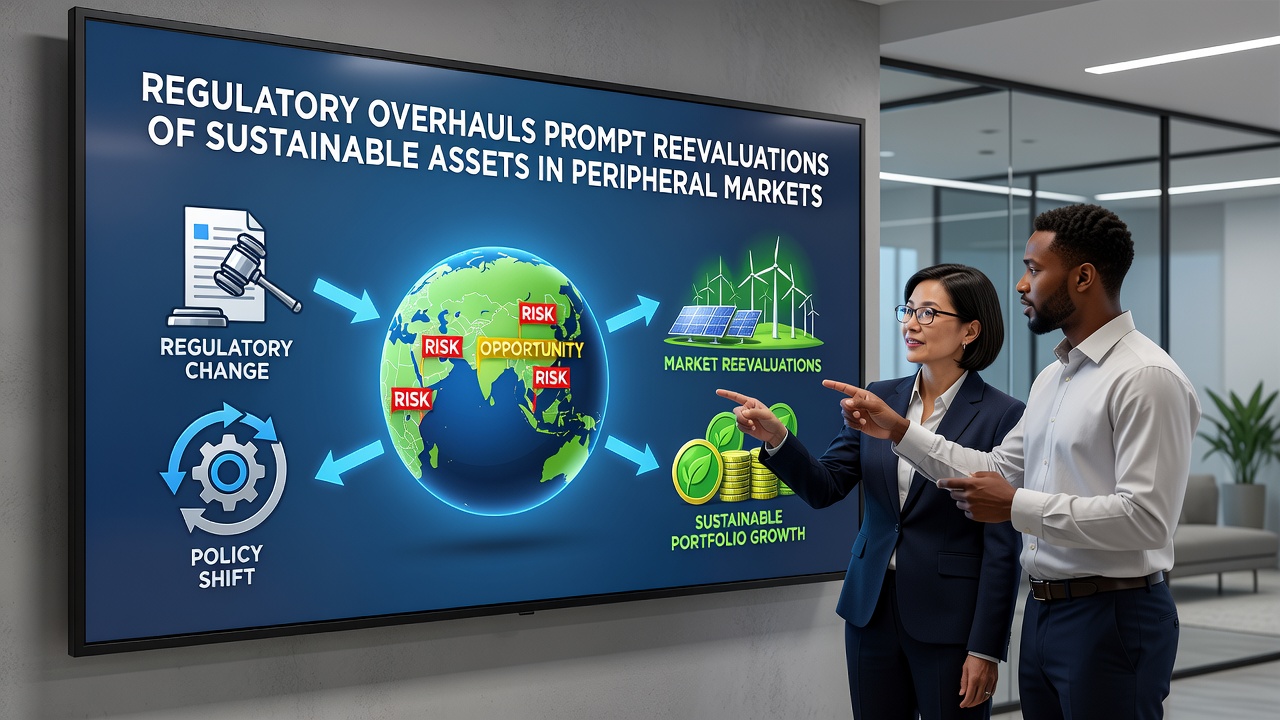
Regulatory frameworks governing sustainable finance have undergone significant updates in multiple jurisdictions, and these shifts now require asset managers to recalibrate valuations for green infrastructure projects in peripheral markets such as parts of Southeast Asia, Eastern Europe, and Latin America. Data from the OECD indicates that disclosure requirements on climate-related risks expanded in 2025, which in turn forced funds holding renewable energy portfolios to incorporate new stress testing protocols by the close of that year.
Observers note that peripheral markets often feature higher exposure to transition risks because local grids rely more heavily on legacy fossil fuel infrastructure, yet many of those same markets attract capital for solar and wind developments under older incentive schemes. When updated rules take effect, project cash flow projections change because carbon pricing mechanisms and supply chain due diligence mandates alter operating cost assumptions. In November 2026 several EU-aligned reporting standards will apply to cross-border holdings, and asset revaluations in those jurisdictions have already begun ahead of the deadline.
Key Regulatory Drivers
Multiple bodies have introduced overlapping requirements that intersect at the level of sustainable asset pricing. The U.S. Securities and Exchange Commission finalized climate disclosure rules that apply to foreign issuers accessing American capital markets, while the OECD released updated guidance on sustainable finance alignment for non-OECD economies. Those updates emphasize Scope 3 emissions tracking, and companies operating in peripheral markets must now collect data from suppliers that previously operated under lighter reporting regimes.
Because many peripheral market projects depend on equipment imported from jurisdictions with stricter manufacturing standards, the new tracking obligations raise compliance costs that were not factored into earlier net present value models. Research from academic institutions shows that renewable asset discount rates in these regions have widened by between 80 and 150 basis points since the middle of 2025, reflecting both higher perceived regulatory risk and the cost of additional verification layers.
Impact on Asset Classes
Solar and wind installations represent the largest share of sustainable assets under review, followed by sustainable agriculture and water infrastructure. Peripheral market solar projects that secured feed-in tariffs under legacy contracts now face margin compression once new carbon border adjustment mechanisms apply to imported components. Data shows that roughly 35 percent of such projects in Southeast Asian markets carry refinancing clauses triggered by changes in regulatory classification.

Those who've studied this know that lease structures for wind farms in Eastern European markets often include escalation clauses tied to EU taxonomy alignment, and when those clauses activate the effective yield on existing debt tranches declines. Meanwhile, investors holding minority stakes in Latin American hydropower assets must incorporate biodiversity impact assessments that were optional under prior frameworks. Figures released by the IMF reveal that sustainable fund inflows to peripheral markets slowed by 12 percent year-over-year in the first three quarters of 2026, coinciding with the announcement of expanded verification requirements.
Market Responses and Adjustments
Portfolio managers have responded by adjusting hurdle rates and extending due diligence timelines. Some funds now require third-party audits of supply chain emissions before committing fresh capital, and this practice has lengthened transaction cycles by an average of six weeks. In parallel, developers in peripheral markets have begun embedding regulatory compliance reserves into project budgets, which reduces distributable cash flow available to equity holders.
What's interesting is that certain markets have seen faster adaptation because local regulators pre-aligned their disclosure templates with international standards. In those jurisdictions, revaluation exercises completed in the third quarter of 2026 showed smaller adjustments than initially projected. Elsewhere, where alignment remains partial, valuation gaps persist and have prompted some funds to explore asset sales or co-investment structures that transfer regulatory risk to local partners.
Conclusion
Regulatory overhauls continue to reshape how sustainable assets in peripheral markets are valued, and the process shows no sign of slowing as additional standards phase in through 2027. Asset managers who track both the timing of new rules and the geographic variation in implementation maintain clearer visibility into required capital adjustments. Continued monitoring of regulatory calendars and updated modeling assumptions will determine how quickly pricing stabilizes across these markets.