Jonas Russell · 31 October 2026
Interest Rate Volatility Forces Retail Chains to Reassess Inventory and Lease Valuations
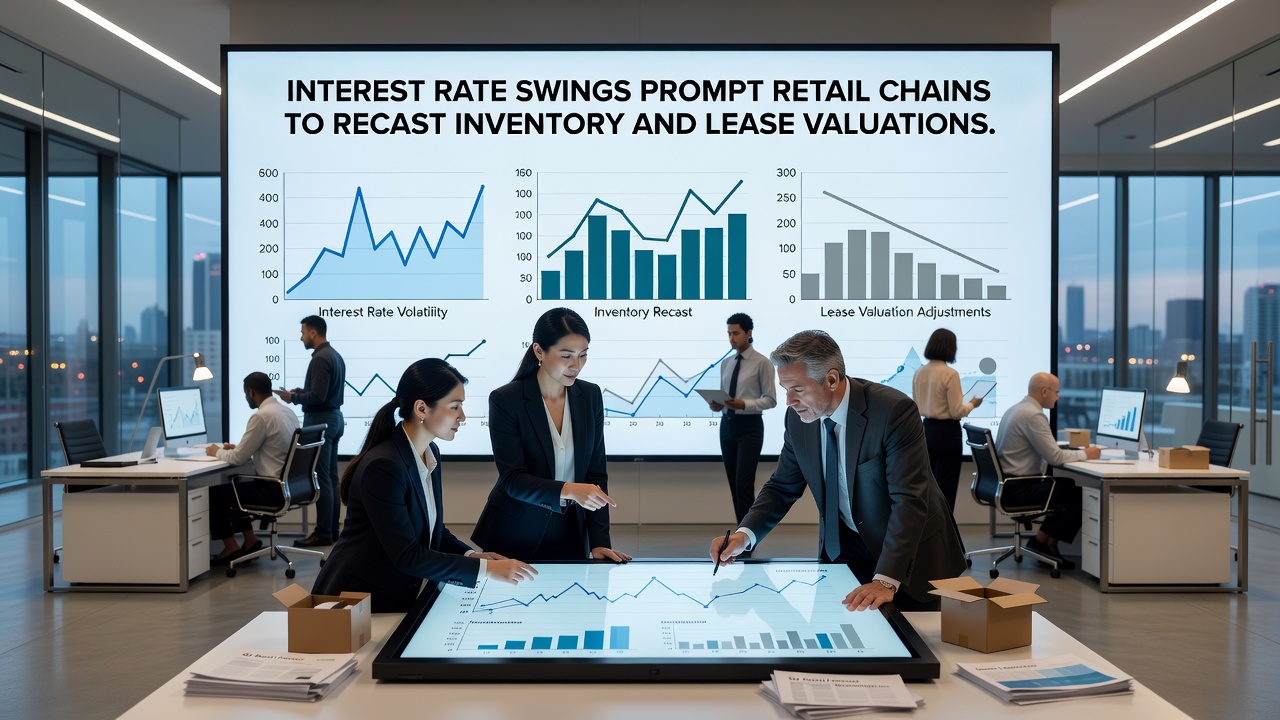
Retail chains across multiple regions have begun adjusting their approaches to inventory carrying costs and lease accounting as central banks maintain elevated benchmark rates into late 2026, with observers noting that discount rate assumptions embedded in lease liability calculations require frequent updates under standards such as IFRS 16 and ASC 842. Data from the Federal Reserve indicates that the federal funds rate remained in the 4.25 to 4.50 percent range through October 2026, prompting finance teams to revise incremental borrowing rates used for present-valuing lease payments and to reassess net realizable values for slow-moving stock where holding costs have risen.
Lease portfolios represent one of the largest balance-sheet items for many retailers, and higher interest rates directly increase the discount factors applied to future rental obligations, which in turn elevates reported lease liabilities while compressing right-of-use asset values; analysts at the European Central Bank have documented similar patterns among euro-area chains where the deposit facility rate stood at 3.75 percent during the same period. Inventory valuation adjustments occur more indirectly yet remain material because elevated financing costs reduce the economic benefit of holding safety stock, leading some operators to accelerate write-downs when expected selling prices no longer cover the compounded carrying charges.
Lease Accounting Adjustments Under Current Rate Conditions
Companies that entered long-term property leases during the low-rate environment of 2020 through 2022 now face the need to recalculate liabilities each reporting period because accounting guidance requires use of the rate at lease commencement unless a modification triggers remeasurement. Retail groups with significant store networks in North America and Western Europe have reported increases in lease liabilities of between 8 and 14 percent year-over-year solely due to rate-driven remeasurements, according to aggregated regulatory filings reviewed by market participants. Those adjustments flow through to impairment testing of right-of-use assets, producing additional non-cash charges that affect operating profit metrics used by investors and lenders.
Store closure programs have accelerated in several chains as the present value of remaining lease payments exceeds the recoverable amount of associated assets when discounted at current market rates. One mid-sized apparel retailer operating 180 locations across the United States and Canada completed a portfolio review in the third quarter of 2026 that resulted in the early exit from 27 underperforming sites, with the decision supported by updated lease valuation models incorporating the higher incremental borrowing rate environment.
Inventory Valuation and Working-Capital Pressure
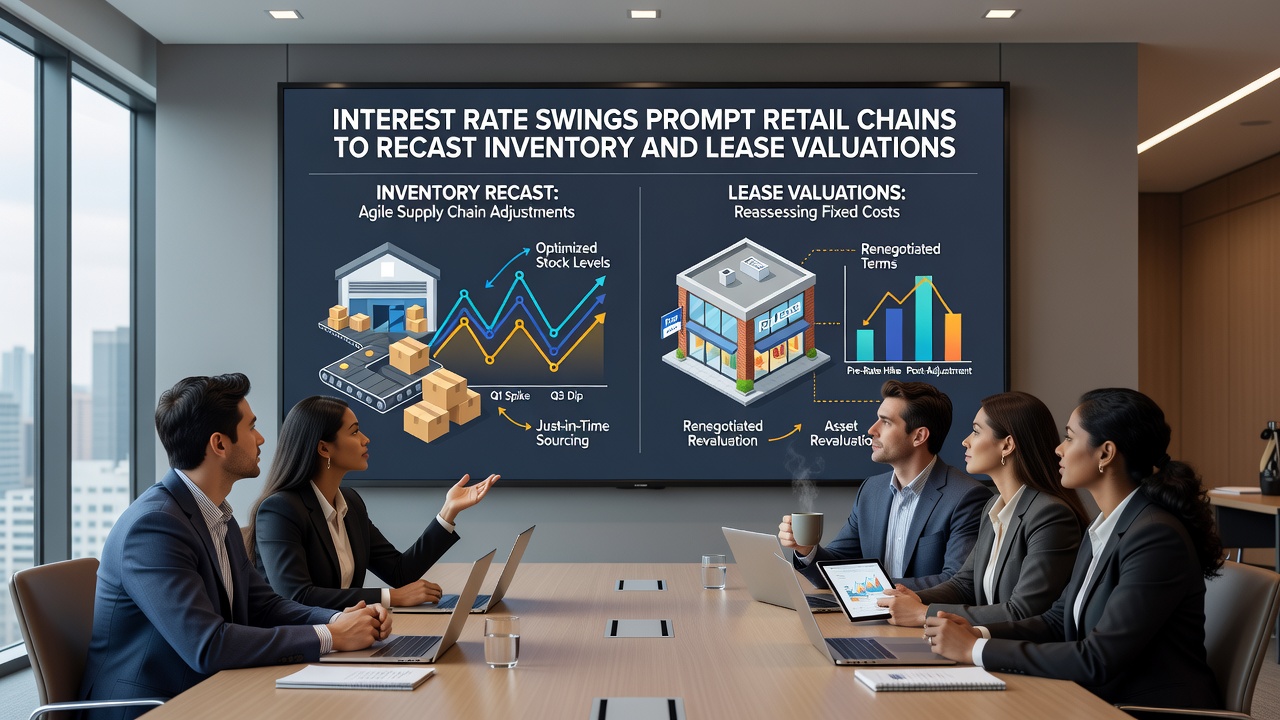
Inventory accounting under lower-of-cost-or-net-realizable-value rules incorporates financing costs only indirectly, yet the opportunity cost of capital has become a practical constraint for procurement teams. Retailers that previously maintained 90 to 120 days of forward cover have shortened cycle times to 60 to 75 days in categories with longer shelf lives, according to supply-chain surveys conducted by industry associations in Australia and Canada. The shift reduces exposure to interest expense but increases the risk of stock-outs during peak selling periods, forcing tighter coordination between merchandising and treasury functions.
Seasonal goods such as holiday apparel and outdoor equipment have seen the most visible changes, with buyers placing smaller initial orders and relying on more frequent replenishment cycles that carry higher unit logistics costs yet lower overall financing charges. Data released by Statistics Canada in September 2026 showed a 6.2 percent decline in average inventory holdings among general-merchandise retailers compared with the prior year, a movement attributed in part to sustained borrowing costs above 5 percent for short-term working-capital facilities.
Regional Variations and Reporting Implications
European chains subject to IFRS requirements have encountered additional complexity because the standard mandates reassessment whenever there is a change in lease term or payments, and many landlords have sought rent indexation clauses tied to inflation that interact with rate movements. In contrast, U.S. filers applying ASC 842 must monitor for lease modifications but retain the original discount rate for unmodified contracts, creating a divergence in reported metrics between otherwise similar businesses. Observers note that multinational retailers therefore maintain separate valuation models for each reporting jurisdiction, increasing the administrative burden on finance departments already stretched by quarterly close processes.
Academic research from the University of Melbourne has examined the correlation between rate volatility and lease renegotiation activity, finding that chains with more than 50 percent of leases maturing within 36 months pursued extensions at lower frequencies once market rates exceeded 4 percent. The study, published in the third quarter of 2026, also highlighted that inventory turnover ratios improved modestly among firms that adopted dynamic pricing tools to clear older stock before carrying costs compounded further.
Conclusion
Retail finance teams continue to monitor central-bank communications for signals on future rate paths while updating valuation models on a quarterly cadence, because even modest movements in benchmark rates can produce material swings in reported lease liabilities and asset carrying values. The combination of higher discount rates for leases and tighter working-capital discipline for inventory has prompted many chains to accelerate digital sales channels that require lower physical-asset footprints, though the transition itself carries implementation costs that must be weighed against the ongoing expense of legacy store networks. Regulatory filings through October 2026 reflect these ongoing recalibrations without indicating a uniform recovery trajectory across the sector.